- 3Viewpoints linked by free shuttle
- $99All-Access Pass (before tax)
- ~1MVisitors per year
- 108 miOf Colorado River on Hualapai land
- ~2.5 hrsDrive from Las Vegas
Grand Canyon West: More Than the Glass Bridge
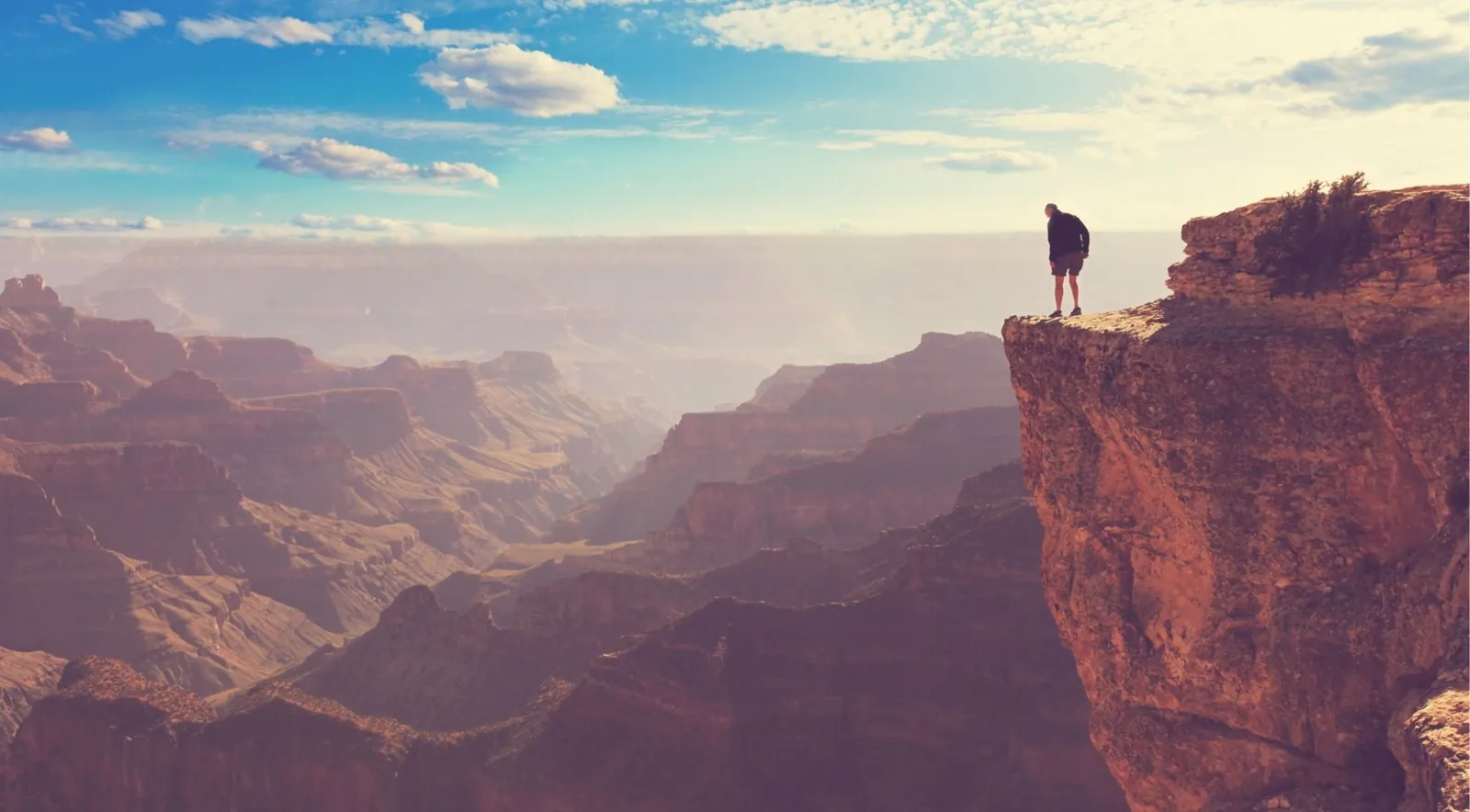
Grand Canyon West is a 125-mile drive from Las Vegas, spread across three viewpoints linked by a shuttle, on a million acres of sovereign Hualapai land. It has a rusting 1957 aerial tramway with one of the strangest industrial histories in Arizona. It has a promontory — Guano Point — with 360-degree canyon views that regular visitors quietly rate above the Skywalk. And it is the only stretch of Grand Canyon rim where the people who have lived alongside the canyon for centuries are the ones showing you around.
Below you will find what is at each viewpoint, how long to give it, how the shuttle works, what it costs in 2026, and an honest account of what people love and what they complain about. For the Skywalk itself — engineering, height, the current phone policy — see our dedicated Grand Canyon Skywalk complete guide.
What Is Grand Canyon West — and What It Isn't
Grand Canyon West is a Hualapai tribal enterprise, not a federal park. This matters more than it sounds, and it catches visitors out every day.
Sovereign Land, Not a National Park
Grand Canyon West is owned and operated by the Hualapai Tribe through the Grand Canyon Resort Corporation, on the Hualapai Indian Reservation. The National Park Service has no role here. There is no "West Rim" within Grand Canyon National Park — the term is geographic shorthand that hardened into marketing. Practical consequences: your America the Beautiful pass, senior pass and military pass are all invalid; you buy a separate Hualapai-issued admission pass. Entry is charged per person, not per vehicle, and it costs substantially more than the national park.
The Hualapai Reservation
The reservation was established by executive order on 4 January 1883, signed by President Chester A. Arthur. It covers roughly 992,462 acres across Coconino, Yavapai and Mohave counties, and its northern boundary follows 108 miles of the Colorado River through the Grand Canyon. Elevations range from about 1,500 feet at the river to over 7,300 feet at the Aubrey Cliffs. The tribal capital is Peach Springs, on historic Route 66 — the principal inspiration for Radiator Springs in Pixar's Cars. The tribe is explicit that it receives no federal funding; tourism revenue sustains community services and cultural preservation.
Other Grand Canyon West Experiences You Might Enjoy
Beyond the glass bridge at Eagle Point, Grand Canyon West offers some of the most memorable canyon views in Arizona — especially from Guano Point, where the Colorado River is visible far below. Visitors from Las Vegas often combine the West Rim with Hoover Dam on a combo day tour, or upgrade to a helicopter landing that descends to the canyon floor. Grand Canyon West tours from Las Vegas typically include admission, two meals and hotel pickup. Small-group tours and Skywalk combo packages are also widely available from the Strip. A Hualapai cultural experience including live song and dance is included at Eagle Point with every pass.
Why the Canyon Looks Different Here
If you have seen photographs of the South Rim and then stand at Eagle Point, something will feel slightly off — and that is worth understanding before you arrive.
The rim is much lower. Grand Canyon West sits at roughly 4,770 feet above sea level. The South Rim is around 7,000 feet; the North Rim reaches 8,000 feet and above. You are standing more than 2,000 feet lower than the classic viewpoints, and the canyon beneath you is correspondingly shallower — around 3,600 feet down to the Colorado River at the viewpoints.
The canyon is wider and more open. What you see in the walls here is the flat-lying Paleozoic sequence — Kaibab Limestone at the caprock, then Toroweap, Coconino Sandstone and Hermit Shale below. What you largely do not see is the Vishnu Basement Rocks — the near-two-billion-year-old dark schist of the inner Granite Gorge that gives the central canyon its brooding depth. The western canyon is wider, drier, more open, and more desert. Different rather than lesser — but worth knowing before you go.
The western canyon has volcanoes. Cenozoic volcanic activity is confined to the western Grand Canyon, with lava flows and cinder cones visible across the Shivwits and Uinkaret plateaus. Some eruptions in the Uinkaret field occurred roughly 950 years ago. And despite the ancient rock in the walls, the canyon itself was carved only about five to six million years ago.
Eagle Point, Guano Point and Hualapai Point
Everything at Grand Canyon West happens at three stops on a shuttle loop. Here is what is at each one.
Eagle Point
Home to the Skywalk glass bridge and the point most visitors head to first. The "eagle" is a natural rock formation on the opposite canyon wall, wings apparently outstretched — once someone points it out you cannot stop seeing it. The eagle is best seen from the middle of the Skywalk or from inside the Sky View Restaurant. Also here: an open-air Native American village with replica dwellings representing several Southwestern peoples, live Hualapai song and dance performances (living cultural practice, not a floor show — watch respectfully), the Sky View Restaurant and Skywalk Café, free lockers and an elevator to the Skywalk level, and the Main Terminal with tribal exhibits, dining and a gift shop of handcrafted jewellery and weavings. Eagle Point is the most wheelchair-accessible of the three viewpoints, with paved paths and railing-less rim access. Allow 60–90 minutes.
Guano Point — The One People Remember
This is the one. A promontory wrapped by sweeping canyon bends, giving genuine 360-degree views with the Colorado River visible below sheer walls. Included with every pass, no extra charge. The rusting headhouse and tramway remnants are the best interpretive object on site. An aerial tramway was built in 1957, at a cost of $3.5 million, to mine bat guano for fertiliser from a cave across the canyon; the cave turned out to hold roughly 1,000 tons of usable guano — about 1% of the original estimate — and the operation shut down around 1960. A U.S. Air Force jet later severed the cable. The Highpoint Hike scrambles to the summit for the best views on site — around 0.8 miles round trip and 45 to 60 minutes, over loose rock, with no railings and real exposure. There are good views from the paved area below if you would rather not climb it. Allow 60–90 minutes.
Hualapai Point — The Activity Hub
Historically an "Old West town" called Hualapai Ranch, this stop has been rebranded Hualapai Point with a Hualapai-culture focus. Horseback riding is still offered here, alongside the cabins and a meal by the fire — but the wagon rides and cowboy gunfight shows that still appear in a lot of older articles are no longer listed on the official site. If you specifically want a cowboy experience, verify it directly before you count on it, and be aware that many glowing reviews of those activities actually describe a separate private ranch in Meadview, not this destination. What is here now: the zip line, an arcade with unlimited play, a shooting gallery, the Hwal'bay Gallery of Hualapai stories and exhibits, trading posts with artisan demonstrations, the Gwe Ma'jo Restaurant serving traditional Hualapai and American dishes, and the Cabins — the only lodging inside Grand Canyon West. Stargazing here is excellent; the site is remote and dark, though it is not a certified International Dark Sky Park (that designation belongs to the national park).
Helicopter Descent & Pontoon Boat
The Helicopter Pontoon Package (around $418 per person, includes the All-Access Pass) drops you roughly 3,500 feet to the canyon floor and puts you on a narrated pontoon boat on the Colorado River. A fixed-wing "Flight of the Condor" tour runs around $278. Both can be bundled into Las Vegas tour packages. See our Grand Canyon helicopter tours guide for standalone helicopter options from the Strip.
Vegas Grand Canyon, Hoover Dam & Skywalk Day Tour
The site's most-reviewed Las Vegas to Grand Canyon West tour. A comedy-led VIP coach covers Hoover Dam, the Joshua Tree Forest and Grand Canyon West in a single day, with a sit-down restaurant breakfast and a BBQ lunch at Guano Point included in the base price. VIP bus access means no shuttle queuing at the canyon. The optional Skywalk and a complimentary zipline can be added at booking — they cannot be added on the day.
- Grand Canyon West entry ticket
- Hoover Dam photo stop
- Sit-down restaurant breakfast + BBQ lunch at Guano Point
- Hotel pickup & drop-off from 14 Las Vegas hotels
- Air-conditioned luxury coach with onboard bathroom
- Optional Skywalk + complimentary zipline (select at booking)
Skywalk upgrade must be selected at checkout — it cannot be added on the day.
The most-reviewed Grand Canyon West Rim tour from Las Vegas — free cancellation up to 24 hours before departure.
Check Availability & PricesFree cancellation · Instant confirmation
How the Shuttle System Works
This surprises almost everyone, so plan around it. You cannot drive to the viewpoints. Private vehicles stop at the Main Terminal and Welcome Center. From there, a complimentary hop-on hop-off shuttle runs the loop: Welcome Center → Eagle Point → Guano Point → Hualapai Point → back. You cannot walk between points either — they are miles apart across open desert.
The catch is the queue. Off-peak, waits are often under 10 minutes, with a five-minute ride between stops. But when the Las Vegas tour groups arrive — roughly 11 a.m. to 3 p.m. — waits have been reported at 45 minutes to over an hour at each stop. A 7 a.m. departure from Las Vegas gets you here around 9:30 a.m., ahead of that wave, and it is the single best thing you can do for your day. Frequency is generally every 10 to 15 minutes, tightening at quiet times and stretching during the midday tour-bus surge. There are no reservations — you queue and board the next one. Buses are air-conditioned and accommodate both manual and motorised wheelchairs. One practical tip: the loop runs in one direction. If you leave a point and realise you wanted longer, getting back means riding the full circuit — finish what you are doing before you board.
| Stop | Time to allow | What you are doing |
|---|---|---|
| Eagle Point | 60–90 min | Skywalk, Native American Village, performance, lunch |
| Guano Point | 60–90 min | Views, Highpoint Hike, tramway, Tribal Market |
| Hualapai Point | 45–60 min | Zip line, arcade, gallery, trading posts |
The tribe recommends a minimum of three hours on site; two is possible if you are rushing and will feel like it. Allow a half to full day with the drive from Las Vegas.
Grand Canyon West Tickets and Prices in 2026
Admission is sold as a package — there is no gate fee you pay and then wander.
| Pass | Price (before tax) | Skywalk? | Notes |
|---|---|---|---|
| All-Access Pass | $99 | Yes | Shuttle, zip line, cultural performances, meal vouchers |
| General Admission | $67 | No | Shuttle, viewpoints, cultural tours and trails — no Skywalk, zip line or arcade |
| Sunset Pass | $59 | Yes | Late-day entry; launched May 2026 |
Tribal taxes and fees are added on top of all sticker prices — roughly 15%, which takes the $99 All-Access Pass to about $113 all-in. Kids under 5 are always free; up to two children aged 5–12 enter free with each paying adult All-Access Pass — but only at the ticket counter, not online. If you are travelling with children in that bracket, buy at the counter and do the maths first. Las Vegas bus tours typically run $89–150 per person including admission, transport and a Hoover Dam stop. For a fuller comparison including resellers and tour packages, see our Skywalk tickets & tours guide.
The Skywalk
The Skywalk is a horseshoe-shaped glass bridge extending 70 feet out over the rim, 10 feet wide, hanging around 4,000 feet above the canyon floor directly beneath it. It opened in 2007, cost $30 million, and is engineered to hold far more weight than it will ever carry — the tribe's figure is seventy fully loaded 747s — while withstanding an 8.0 earthquake and 100 mph winds.
The experience: you store your belongings in free lockers, put booties over your shoes to protect the glass, and walk out over the void. It is brief — many people are done in 15 to 20 minutes — and opinion divides on whether it justifies the cost. The straight-down glass-floor perspective is genuinely one of a kind.
Two things most guides still get wrong. First, cell phones are now permitted on the Skywalk as of 2026; the old no-phones rule has been reversed, though you take selfies at your own risk and cameras and bags remain banned. Second, Skywalk access is included in the All-Access Pass at no separate charge — there is no standalone Skywalk ticket any more. Full detail in our Skywalk complete guide and tickets and prices guide.
The Zip Line
2,100 feet across a side canyon, 700 feet above the floor, at up to 40 mph on dual lines — so you can race a companion.
Now part of the All-Access Pass
It used to be a paid add-on. A standalone ticket for General Admission holders runs about $89, so if the zip line appeals at all, the $99 All-Access Pass is the cheaper route to it.
The rules and the cut-off
Opens daily at 9:20 a.m., and you must be in line before 3 p.m. to secure a spot. Riders weigh 90 to 275 pounds and stand at least 4 feet tall; under-18s need an accompanying adult. Reaching the platform means climbing several flights of stairs, capacity is limited, and it closes in high winds.
The insider tip: make the zip line your first stop, before the lines build.
The Colorado River Pontoon and Flights from Here
The only way to reach the canyon floor from Grand Canyon West is a helicopter-and-pontoon package: a helicopter descends around 3,500 feet, then a smooth-water pontoon boat takes you along the Colorado River directly beneath the walls. The official timing is roughly 15 minutes flying, 15 minutes on the boat and 45 minutes in total, and it is $418 per person including the All-Access Pass as of early 2026. Check in at the helicopter terminal an hour before your flight. It is an add-on, not part of standard admission.
These Hualapai-operated flights depart from Grand Canyon West itself rather than from Las Vegas, and they descend into the canyon — the West Rim is the only place along the entire Grand Canyon where below-rim landings are legal. A shorter West Rim landing flight from here is also sold, from around $279 with a required entry package.
For flights that start on the Strip instead, our helicopter tours guide compares the operators and our canyon-floor landing guide covers what the half-hour at the bottom actually involves. Book ahead either way — they sell out.
The Culture, and Why It Matters
Grand Canyon West sits on the Hualapai Reservation, established in 1883, spanning about a million acres along 108 miles of the canyon. This is a tribal enterprise, and your ticket directly supports a sovereign nation that receives no federal funding.
The cultural offerings are a real differentiator from the national-park rims: the Native American Village at Eagle Point, a self-guided trail of authentic dwellings, ovens and sweat lodges representing the Hualapai, Navajo, Plains, Hopi and Havasupai peoples; the Hualapai Bird Singers, indigenous song and dance in an open-air amphitheatre, currently Friday to Sunday from 10 a.m. to 3 p.m., though some sources list it more often, so check on the day; and the Hwal'bay Gallery at Hualapai Point. Hualapai oral history even explains the Eagle Point formation: a giant eagle that saved the people from a great flood and turned to stone.
Some visitors find the performances brief; others deeply appreciate the history and the displays. Either way, it is something the South Rim does not offer.
Eating on Site
Outside food and drink are not permitted, and you need admission to eat at the restaurants. The options:
- Sky View Restaurant (Eagle Point) — sit-down, overlooking the Skywalk
- Skywalk Cafe (Eagle Point) — walk-up, grab-and-go
- Guano Point Cafe — walk-up BBQ with outdoor seating and the best views on site
- Gwe Ma'jo (Hualapai Point) — Hualapai and American dishes, including breakfast
- Grand Canyon Coffee — coffee and light bites
The $10 meal voucher in the All-Access Pass applies at most of these on a $20 minimum spend. An honest note: food reviews are mixed, and slow, cafeteria-style and pricey are the common complaints. Eat a big breakfast before you arrive and treat on-site dining as convenience, not a meal to look forward to.
Rafting Departs Elsewhere
The Hualapai River Runners operate the only single-day motorised whitewater trip in the Grand Canyon, finishing with a helicopter lift-out. But it departs from Peach Springs, a two-hour drive from Grand Canyon West — not from the West Rim — so it is a separate trip rather than a same-day add-on. It costs $589 and bundles an All-Access Pass. More on the river in our canyon-floor guide.
Planning Your Day
Allow at least three to four hours, and more if you are adding the zip line, a meal or a flight. Plenty of people find their "quick two-hour visit" becomes four because of shuttle queues.
1. Arrive early, ticket in hand
Buy online in advance to skip the ticket line entirely. A 7 a.m. departure from Las Vegas puts you on site around 9:30 a.m., ahead of the tour-bus wave.
2. Hualapai Point first
Do the zip line before the lines build, and browse the gallery and trading posts while the other stops are at their busiest.
3. Eagle Point next
The Skywalk, ideally before the 11 a.m. peak, then the Native American Village, a performance if one is running, and lunch.
4. Guano Point last
The best views, the Highpoint Hike and a relaxed cafe stop. End on the highlight rather than rushing it at the start.
Accessibility
The Main Terminal, the shuttle and the restrooms are accessible, with ramps at Hualapai Point and paved paths at Eagle Point and parts of Guano Point. The Highpoint Hike and the tramway path are unpaved, so proceed with care. ADA cabins are available and service dogs are welcome.
What to bring
Sun protection, because shade is limited and it gets hot; water; sturdy closed-toe shoes for the Highpoint Hike and the zip line stairs; a camera or binoculars for everywhere except the Skywalk itself; and a light layer for the wind at the rim.
Hours
Open every day of the year. Doors open at 8 a.m. Winter last entry is around 4:30 p.m. with a 6 p.m. close; summer last entry is around 5:30 p.m. with a 7 p.m. close. Arizona time, which matches Las Vegas in summer and runs an hour ahead in winter. Our best time to visit guide has the month-by-month picture, and the driving guide covers the route out.
Getting to Grand Canyon West from Las Vegas
Self-Drive Route
US-93 south across the Hoover Dam bypass bridge into Arizona for about 48 miles, then left onto Pierce Ferry Road for about 28 miles, then right onto Diamond Bar Road for the final 21 miles. All paved now, including Diamond Bar Road, which was notorious for years as a rough dirt stretch. Three things before you set off: last fuel is at Dolan Springs; cell service disappears (download tickets and maps); and cattle roam free on Diamond Bar Road — drive carefully at dawn and dusk.
Getting Here from Elsewhere
| From | Drive time |
|---|---|
| Las Vegas | ~2–2.5 hrs |
| Kingman, AZ | ~1.5 hrs |
| Phoenix | 4.5–5 hrs |
| Flagstaff | ~4 hrs |
| GCNP South Rim | ~5 hrs |
By tour: You do not need a tour to visit — day visits do not require reservations, and the site does not cap visitor numbers. But guided tours from Las Vegas handle the drive, the navigation, parking and often include admission in the price. See our Las Vegas to Grand Canyon tours guide for a full comparison of bus, helicopter and combo options. For helicopter tours, see our helicopter tours from Las Vegas guide; for combo tours with Hoover Dam, see our Hoover Dam tours guide.
When to Visit Grand Canyon West
Opening Hours
Open every day of the year. Standard season: doors at 8:00am, last entry at 4:30pm, closing at 6:00pm. Summer extends last entry to 5:30pm and closing to 7:00pm. Arizona does not observe daylight saving — for most of the year local time matches Las Vegas.
Best Months
Spring (March–May) and autumn (September–November) are the sweet spot — days in the 60s to 80s°F, comfortable for the Highpoint Hike. Summer is hot and almost entirely shadeless; July averages highs near 98°F and can exceed 100°F. Winter days are pleasant at mid-60s to low-70s, with nights near freezing.
Best Time of Day
Arrive before 10am. Coach tours from Las Vegas land in a block around midday, and the difference at the Skywalk queue and the shuttle stops is stark. The Sunset Pass is the other good answer — later light, thinner crowds, and Skywalk access included. The Skywalk and zip line suspend in lightning or high wind; closure calls are made on the day.
Accessibility
The Skywalk terminal has an elevator; the Skywalk itself is wheelchair accessible. Shuttles accommodate manual and motorised wheelchairs. Eagle Point has paved paths; Guano Point's hiking areas are unpaved and uneven. ADA service dogs are welcome; emotional support animals are not. Wheelchair-lift bus: notify the operator at least 72 hours in advance.
West Rim vs South Rim: Which Is Right for You?
| Grand Canyon West | GCNP South Rim | |
|---|---|---|
| From Las Vegas | ~125 mi, 2–2.5 hrs | ~275 mi, 4.5–5 hrs |
| Managed by | Hualapai Tribe | National Park Service |
| Entry | $99 All-Access per person | Per vehicle; annual passes valid |
| Rim elevation | ~4,770 ft | ~7,000 ft |
| The view | Wider, shallower, drier; river visible from Guano Point | Deeper, more layered, the classic vista |
| Visitors/year | ~1 million | 5–6 million |
| Hiking to the river | Not for day visitors | Yes — marked corridor trails |
| Unique to it | Skywalk, zip line, helicopter-to-floor, Hualapai culture | Historic lodges, museums, rim trail, sunrise viewpoints |
Choose the West Rim if you are based in Las Vegas, short on time, travelling with thrill-seeking teenagers, or you want the Skywalk and a Hualapai-hosted experience. Choose the South Rim if this is your one Grand Canyon visit in a lifetime, you want to hike, or you want the canyon of the classic photographs.
Is Grand Canyon West Worth It?
What People Praise
Guano Point, repeatedly and emphatically — many visitors call it worth the trip on its own. The cultural performances and village. Clean, well-organised facilities and friendly staff. The proximity to Las Vegas. And the knowledge that spending here directly supports a tribe that receives no federal funding.
What People Criticise
The commercialised feel — gift shops before views, and "theme park" comes up often. The cost, which is high and inflexible. The food: mediocre and expensive. Shuttle waits and the midday crush. The heat and lack of shade. And, historically, the no-camera rule on the Skywalk (since relaxed to allow phones).
The Recurring Verdict
The paid Skywalk is the least impressive part of the day; Guano Point's included views are the best. That is worth knowing before you decide how much to spend. Worth it for: first-time canyon visitors based in Las Vegas, families, thrill-seekers, and anyone short on time. Less worth it for: travellers who have already seen the South Rim, serious hikers, and photographers chasing the classic layered canyon.
The Middle Path
General Admission at $67 buys the shuttle, both major viewpoints and the cultural programming for around a third less. You look at the Skywalk rather than walk it, and you still get Guano Point. Our Skywalk tickets guide has the full pass comparison.
Grand Canyon West: FAQ
Is Grand Canyon West part of Grand Canyon National Park?
No. Grand Canyon West is a Hualapai tribal enterprise on the Hualapai Indian Reservation. The National Park Service is not involved, and the national park's South Rim is about five hours and 250+ road miles away. National park passes are not accepted here, and the $100 non-resident surcharge that applies at the national park does not apply here either.
Can I use my national park pass at Grand Canyon West?
No. America the Beautiful and all other NPS passes are invalid here. You must buy a separate Hualapai-issued admission pass. See our Skywalk tickets & tours guide for the full range of pass options and prices.
What is there to do at Grand Canyon West?
Three viewpoints on a shuttle loop — Eagle Point for the Skywalk and the cultural village, Guano Point for the best views and the Highpoint Hike, and Hualapai Point for the zip line, arcade and gallery — plus helicopter and pontoon tours as paid add-ons.
Can you drive to the viewpoints at Grand Canyon West?
No. Private vehicles stop at the Main Terminal. A free hop-on hop-off shuttle serves Eagle Point, Guano Point and Hualapai Point — you cannot walk between them, as they are miles apart across open desert.
Do you have to take the shuttle?
Yes. Private cars cannot go beyond the parking area. The shuttle is free and included in every ticket, and you cannot walk between the stops — they are miles apart across open desert.
Which is better, Eagle Point or Guano Point?
Eagle Point has the Skywalk, the Native American cultural village and live performances. Guano Point has the best panoramic views, the Colorado River clearly visible below, and the historic aerial tramway ruins — and it costs nothing extra. Most visitors, asked to choose one, say Guano Point. If you have time for only one stop, make it Guano Point.
What's the difference between Eagle Point and Guano Point?
Eagle Point has the Skywalk, the Native American Village and the cultural performances. Guano Point has the 360-degree panoramic views, the guano tramway ruins and a short rugged hike. Guano Point is the highlight, and it is included with every pass.
How long do I need at Grand Canyon West?
Three hours minimum on site. Two is possible if you are rushing and will feel like it. With the drive from Las Vegas, allow a half to full day. Adding Hoover Dam — almost everyone does — turns it comfortably into a full day.
How much does Grand Canyon West cost in 2026?
The All-Access Pass is $99 before tribal taxes and fees, and includes the Skywalk, zip line, shuttle, cultural performances and $10 meal and merchandise vouchers. A Sunset Pass for late-day entry is $59. General Admission is $67 before tax and covers the shuttle, viewpoints, cultural tours and trails, but not the Skywalk, zip line or arcade.
What does the All-Access Pass include?
The Skywalk, the zip line, the arcade, cultural experiences, walking trails, the shuttle, and $10 meal plus $10 merchandise vouchers. The $67 General Admission covers the shuttle, viewpoints, cultural tours and trails but none of the Skywalk, zip line or arcade.
Is the zipline included in admission?
It is included in the $99 All-Access Pass. General Admission holders pay about $89 extra for it, which is why the All-Access Pass is the cheaper route if the zip line appeals at all.
Can you take photos on the Skywalk?
Cell phones are now permitted as of 2026, reversing the long-standing ban. Cameras and bags are still not allowed and go in free lockers, and the on-site photographers sell prints.
Can you eat at Grand Canyon West?
Yes, at several cafes and restaurants including the Sky View Restaurant, the Guano Point BBQ cafe and Gwe Ma'jo at Hualapai Point. Outside food and drink are not permitted, reviews are mixed, and a big breakfast beforehand is wise.
How far is Grand Canyon West from Las Vegas?
About 125 miles, 2 to 2.5 hours by road. All roads including Diamond Bar Road are fully paved and fine for a standard rental car. Fuel up before Dolan Springs and download your tickets before you lose cell service.
Can you do Grand Canyon West independently, or do you need a tour?
You can drive yourself — it is about 2 to 2.5 hours from Las Vegas on fully paved roads. A tour removes the driving and the parking, and usually bundles admission. Our driving guide covers the route and the fuel stops.
Is there anywhere to stay at Grand Canyon West?
Yes — rustic rim-facing cabins at Hualapai Point, sleeping up to six, roughly $100–130 per person including breakfast. The Western entertainment that used to come with them is no longer listed on the official site, so confirm what is included before booking. Cabin guests can check in at any hour and receive a discount on the All-Access Pass. Dry-camping RV parking at the Welcome Center runs $22 per night, three-night maximum.
Can you see the Colorado River from Grand Canyon West?
Yes, most clearly from Guano Point. The river is visible far below the canyon walls from the promontory. The view from the Skywalk area at Eagle Point is more oblique and distant.
Is Guano Point safe?
There are no safety railings anywhere along the edges of Guano Point. A visitor died in a fall there in November 2025. The views are exceptional and the risk is entirely manageable with ordinary caution — stay well back from unprotected edges, especially when focusing on a camera or when the wind picks up.
Is Grand Canyon West worth it?
For the views, the Skywalk and the cultural experience on a Las Vegas day trip, most visitors say yes, and Guano Point alone justifies the drive for many. A vocal minority find it overpriced next to the national park, which charges $35 per vehicle rather than $67 to $99 per person.